How thermal treatment works ?
From contaminated soil to clean land
Thermal remediation uses heat to remove contaminants from soil. By carefully controlling temperature and airflow, contaminants are transformed into vapors, captured, and safely treated before clean soil is returned to the site.
✅ Understand the overall thermal remediation process
✅ See how the heat transfers into the soil
✅ Discover the role of vapor extraction and treatment
Conductive Thermal Heating - Step by Step
Bringing Heat Directly into the Ground
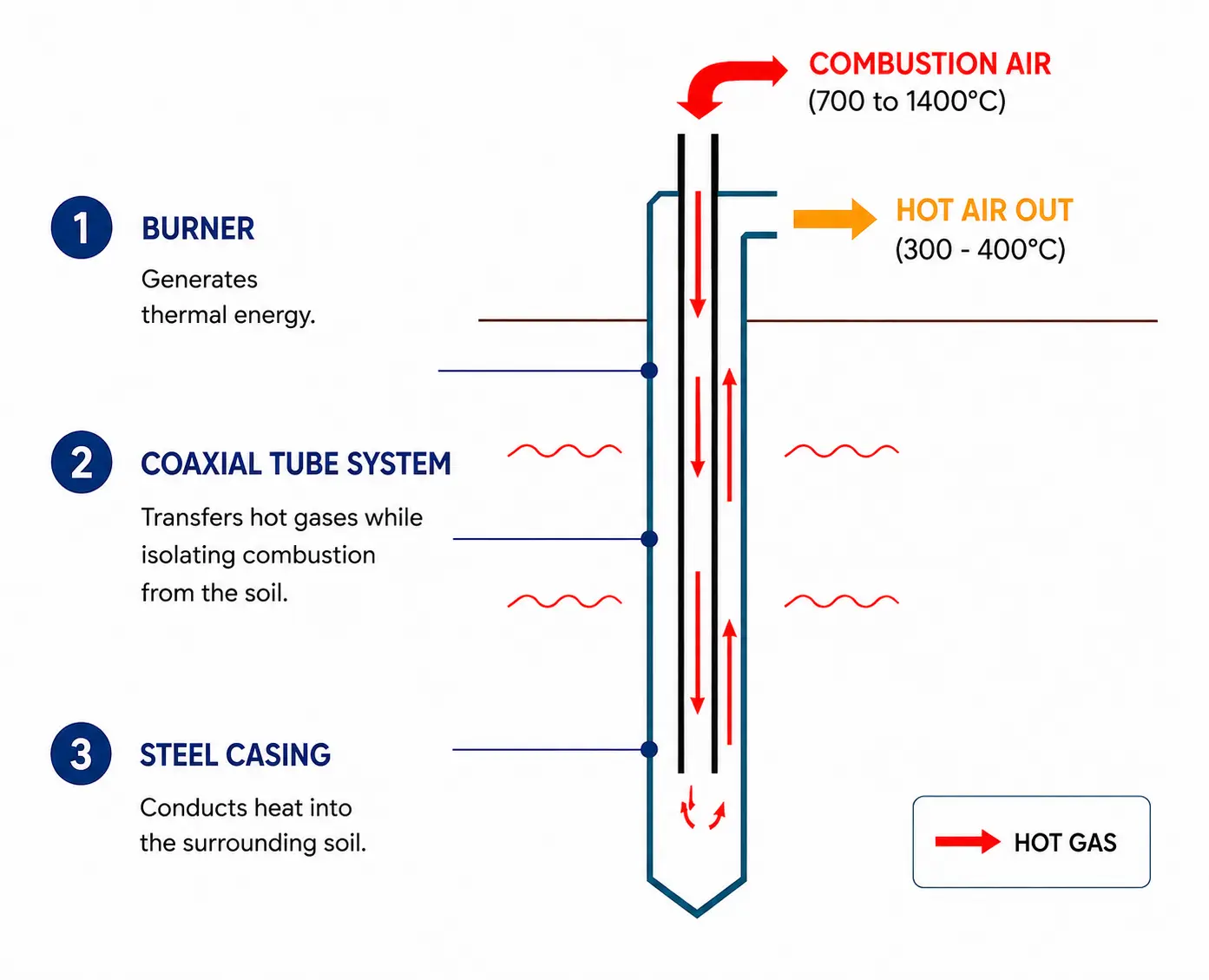
🔥 Coaxial tube technology
📍 Optimized heater spacing
🌡 Uniform conductive heating
⚙ Engineered for predictable remediation
As contaminants become volatile, they are continuously extracted under negative pressure through dedicated vapor recovery wells.
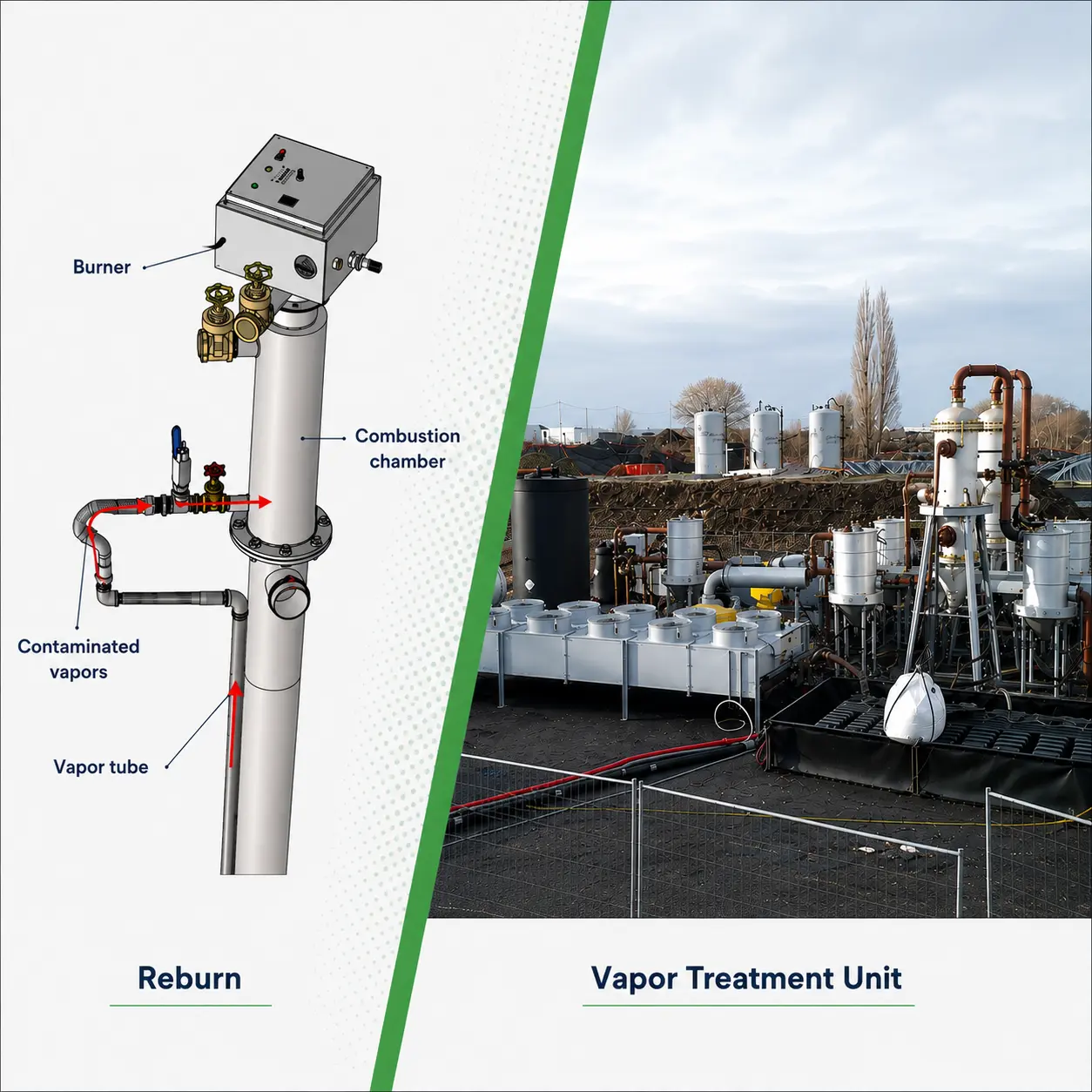
The extracted vapors are then routed to an engineered treatment train selected according to the contaminant type and regulatory requirements before clean air is released :
✅ Reburn : contaminated vapors are directly reinjected in the flame to be thermaly oxidized.
✅ Vapor Treatment Unit : contaminated vapors are condensed and concentrated on granulated activated coal
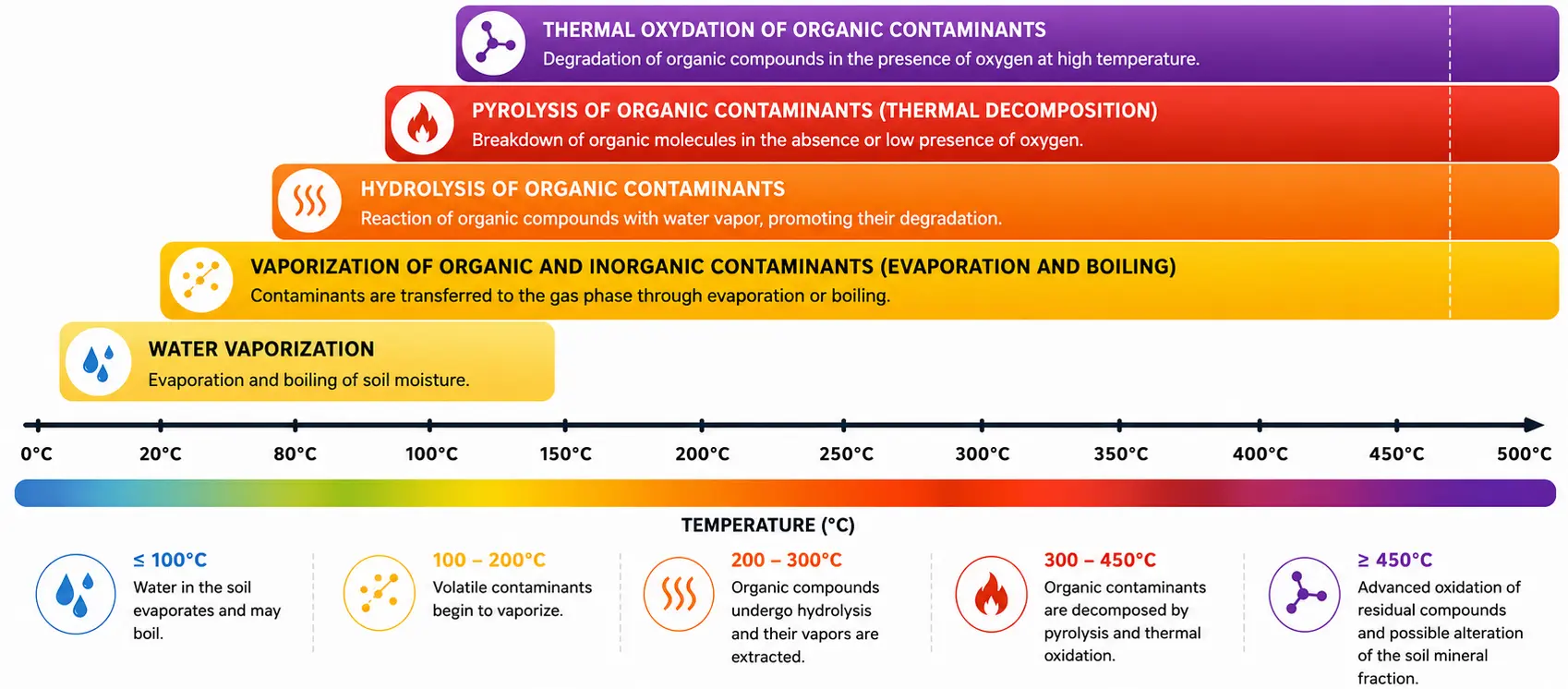
Temperature Activates Different Remediation Mechanisms
As soil temperature increases, different physical and chemical mechanisms occur, progressively removing or destroying contaminants.