Home › Contaminants › PAHs
PAHs
Polycyclic Aromatic Hydrocarbons (PAHs) are a group of organic compounds formed during the incomplete combustion of carbon-containing materials. They are among the most common contaminants found in industrial soils and sediments.
Where PAH contamination occurs
Typical sources include:
- Former gasworks and manufactured gas plants (MGPs)
- Coking plants
- Steel and metallurgical industries
- Creosote treatment facilities
- Oil refineries and petrochemical sites
- Waste incineration facilities
- Fuel spills and historical industrial activities




Common PAHs
Light PAHs
- Naphthalene
- Acenaphthylene
- Acenaphthene
- Fluorene
Medium PAHs
- Fluoranthene
- Pyrene
- Benzo(a)anthracene
- Phenanthrene
Heavy PAHs
- Benzo(b)fluoranthene
- Benzo(k)fluoranthene
- Indeno(1,2,3-cd)pyrene
- Benzo(g,h,i)perylene
Priority Carcinogenic PAHs
- Benzo(a)pyrene
- Dibenzo(a,h)anthracene
- Chrysene
- Anthracene
Why PAHs are a concern
PAHs strongly adsorb to soil organic matter, making natural degradation slow and often incomplete.
Potential impacts include:
- Mutagenic and carcinogenic risks
- Ecotoxicity affecting plants and wildlife
- Groundwater contamination
- Long-term environmental liabilities
Because of their persistence and toxicity, PAHs are among the most regulated contaminants at industrial brownfield sites.
Choice of remediation technology
Thermal desorption has become one of the most effective remediation technologies for PAH-contaminated soils because it physically removes contaminants from the soil matrix and significantly reduces long-term liabilities.
Thermal Desorption with Haemers Technologies
PAHs are semi-volatile organic compounds whose volatility increases significantly with temperature.
Thermal desorption:
- Breaks the bond between PAHs and soil particles
- Enhances contaminant mobility
- Accelerates removal rates dramatically
- Reduces remediation time from years to weeks
Depending on contaminant type and treatment temperature, removal efficiencies exceeding 95–99% are routinely achieved.
Thermal treatment targets are often set between 150 and 250°C for better removal efficiency.
Heavy PAHs
Even heavier PAHs that are strongly bound to soil organic matter can be effectively removed at elevated temperatures.
However, higher molecular weight PAHs such as Benzo(a)pyrene generally require higher treatment temperatures to achieve complete removal.
From heating to vapour treatment
Smart Burners™ circulate hot gases through a network of steel heating pipes installed within the contaminated soil.
As soil temperature rises, PAHs desorb from soil particles and their vapour pressure increases significantly.
The treatment area is maintained under controlled negative pressure.
The selected treatment train is adapted to the site-specific contaminants.
Vacuum extraction and vapour treatment
This ensures that PAH vapours are continuously extracted while preventing fugitive emissions and protecting workers and nearby communities.
Extracted vapours are safely treated using technologies such as:
- Re-Burn systems
- Condensation
- Activated carbon adsorption
- Catalytic oxidation
Homogeneous heating
The heat is transferred directly into the soil, ensuring homogeneous treatment and precise temperature control.
Key benefits of thermal desorption
Permanent Contaminant Removal
PAHs are removed from the soil rather than contained or transferred.
High Removal Efficiency
Thermal desorption routinely achieves remediation targets for both light and heavy PAHs.
Fast Remediation
Projects are completed within weeks rather than years of biological treatment or monitoring.
Controlled and Safe Operations
Smart Burners™ technology combines precise heating, vacuum extraction and advanced vapour treatment.
Ideal for Industrial Brownfields
Particularly suitable for former gasworks, coking plants, steel industries, refineries and creosote-contaminated sites.
PAH references
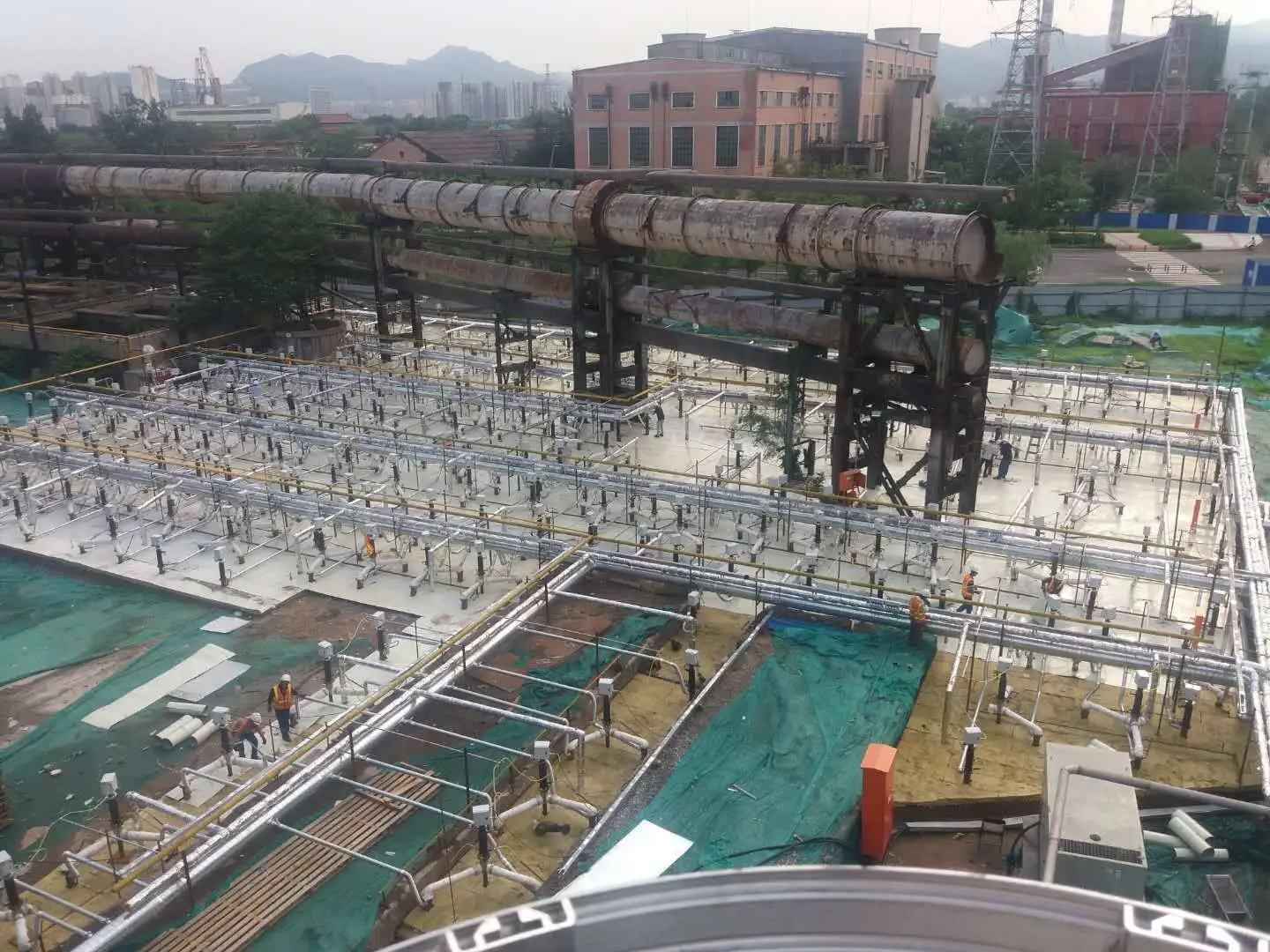
Large-Scale In-Situ Thermal Remediation of Former Steel and Coking Plant Contamination for Olympic Redevelopment
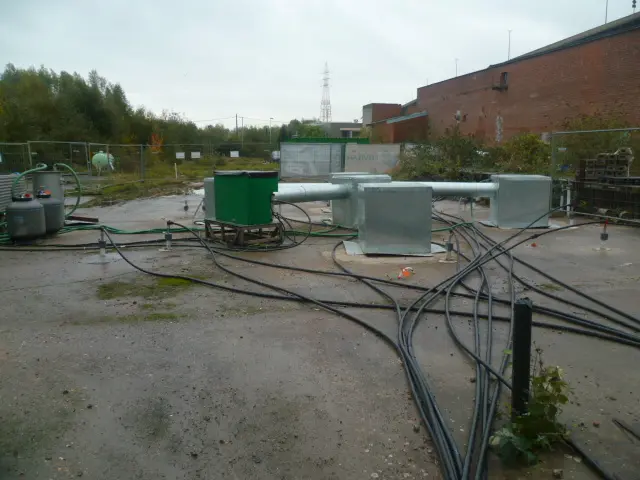
Ex-Situ Thermal Desorption of PAH-Contaminated Soil at a Former Railway Site in Livarot, France
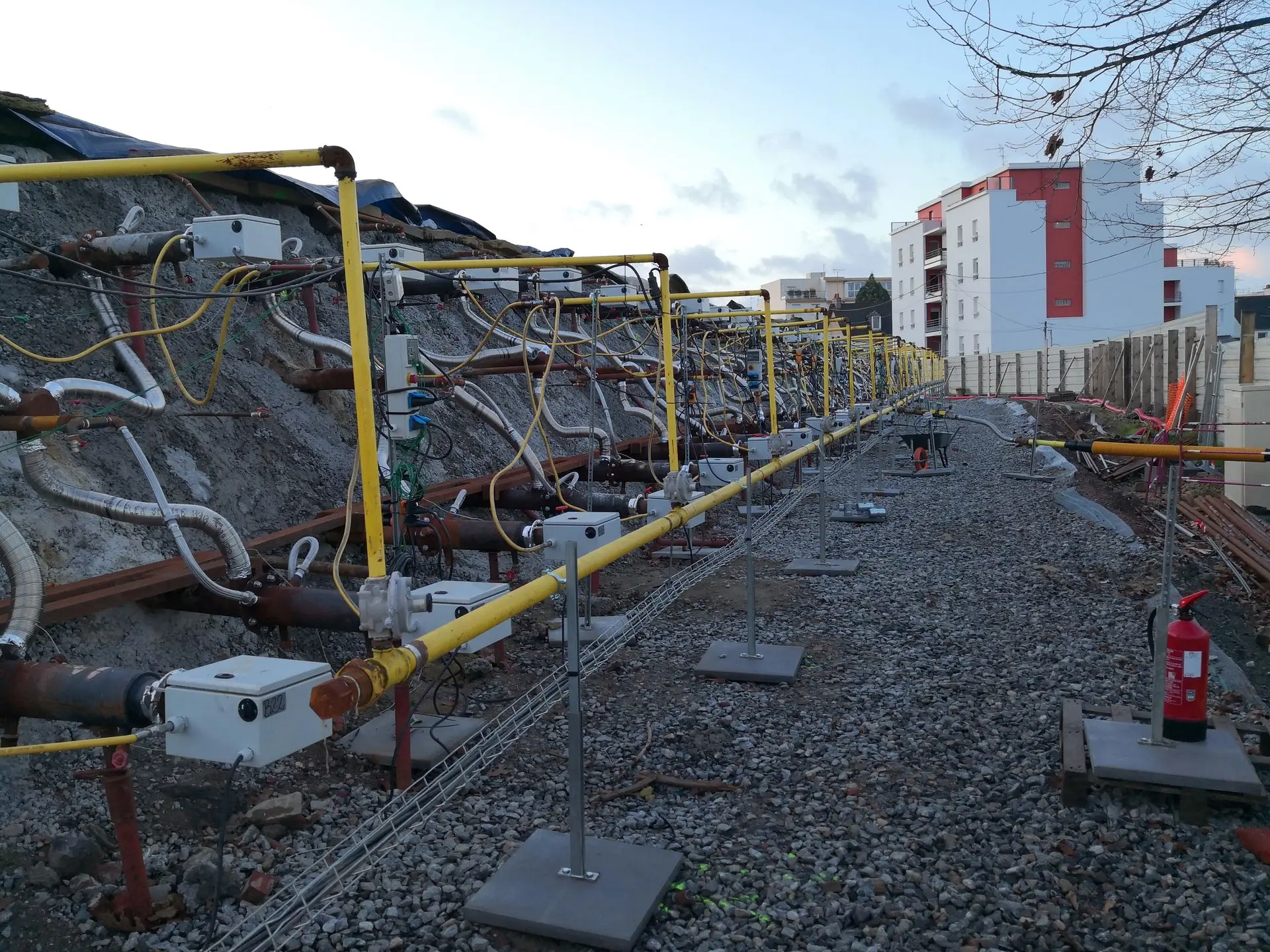
Urban Soil Remediation of Former Gas Plant Contamination Using Ex-Situ Thermal Desorption
Sites impacted by PAHs
See how we have treated PAH on real projects, or send us your site details for a tailored proposal.
Contact
Site assessment, preliminary estimate and licensing.